
Guillaume Groen van Prinsterer
Translated, edited, and contextualized by Ruben Alvarado
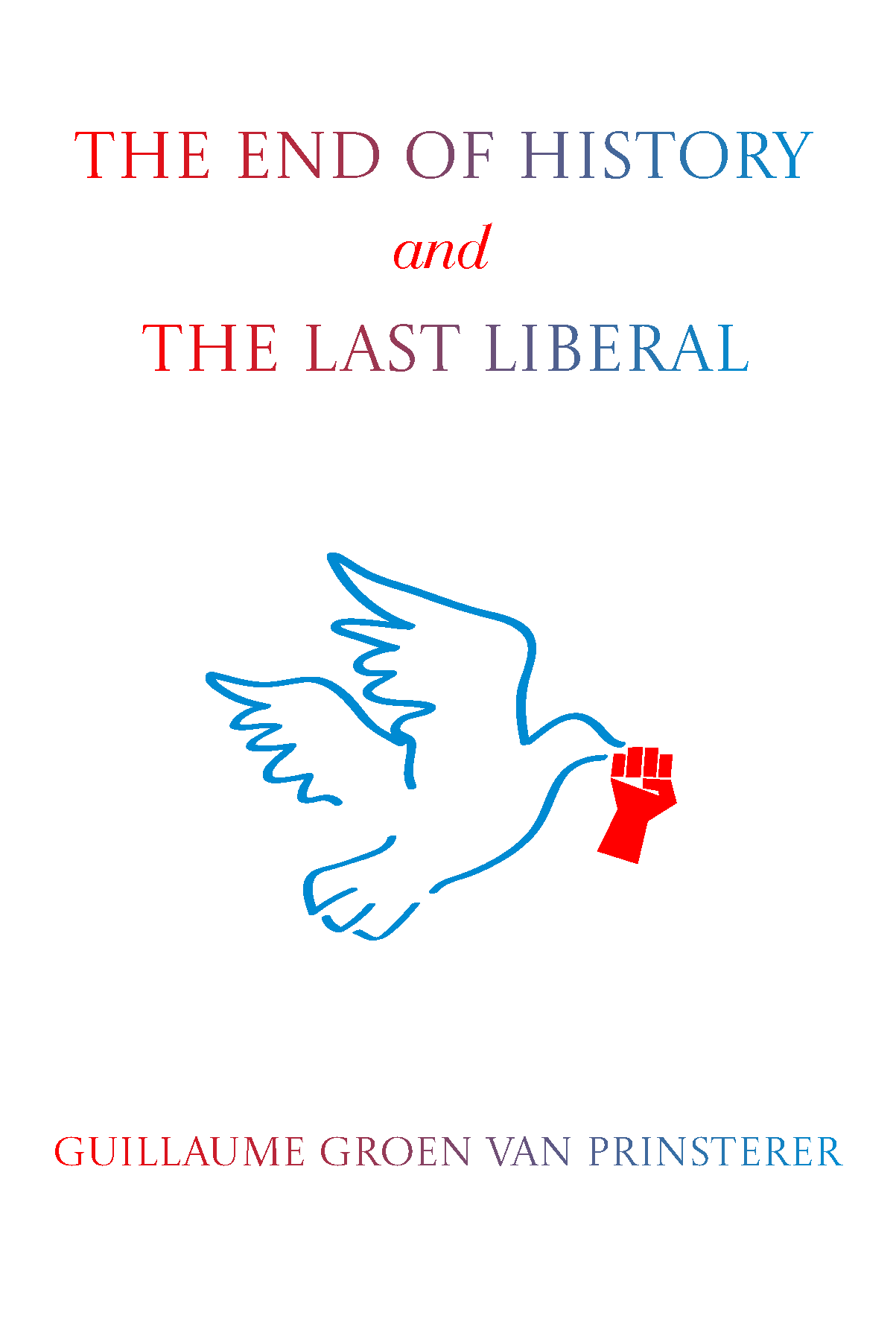
They were heady days in November of 1989. With the Fall of the Berlin Wall, the end of the Cold War beckoned. The West had triumphed. Francis Fukuyama proclaimed it: “What we may be witnessing is… the end point of mankind’s ideological evolution and the universalization of Western liberal democracy as the final form of human government.” The End of History had arrived in the form of liberal democracy.
Or so it seemed. For as the 21st century progressed, this same liberal democracy came under increasing pressure, precisely from two of the antagonists it supposedly had vanquished. Islam increasingly made itself felt, occupying the spiritual vacuum that Fukuyama and those like him had celebrated as the triumph over superstition and bigotry. And communism, supposedly left in the rear-view mirror, showed instead that it had answers to the questions that liberalism left unanswered.
This turn of events would have come as anything but a surprise to the 19th-century Dutch statesman Guillaume Groen van Prinsterer. In fact, Groen anticipated these developments, arguing that liberalism was inherently unstable, the uneasy compromise between the ideal and the real. In these selections published between 1830 and 1871, Groen turns Fukuyama’s thesis on its head; he shows that liberalism is an inconsistent, partly developed fruit which of necessity must give way to the consistent, fully-developed fruit, viz., socialism and communism. Hence, as the Marxists have always contended, history is on their side. At least, if history is what the Revolution makes it out to be. Groen offers an alternative destination: the Kingdom of God. History is the tale of the struggle between the two. Groen’s analysis provides the guidance to follow it.
GUILLAUME GROEN VAN PRINSTERER was a leading Dutch statesman, historian, and political theorist of the 19th century. He was a pioneering thinker in the tradition of Christian political, legal, and social thought, in particular in forging the reorientation of theoretical thought toward presuppositional methodology. Along with Friedrich Julius Stahl, he thus stood at the forefront of the new discipline of worldview thinking.
Information
Print ISBN: paperback 978-90-83661-21-6
            hardback  978-90-83661-22-3
Trim Size: 6.000" x 9.000" (229mm x 152mm)
Page Count: 644
Retail Price: paperback $22.99/£17.32/€20.72
              hardcover $36.99/£26.99/€31.99
Publication date: December 2nd, 2026
Review copies available upon request